
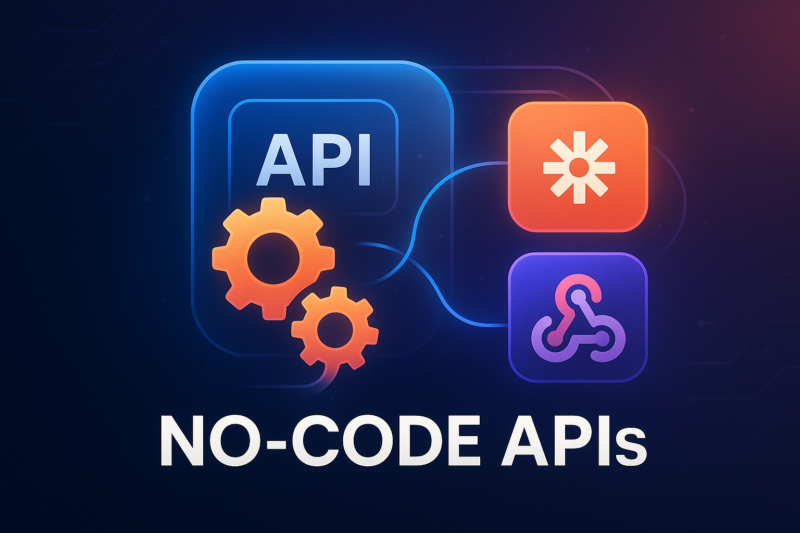
Introduction to No-Code APIs: A Business Automation Revolution
In today’s rapidly evolving digital landscape, businesses are constantly on the lookout for innovative solutions to streamline operations and boost efficiency. Enter the world of no-code APIs—a transformative force in business automation. These powerful tools empower organizations to connect diverse applications and automate complex tasks without writing a single line of code. This form of API automation is revolutionizing the way businesses operate by making business automation solutions accessible to everyone, regardless of their technical expertise.
No-code APIs, often powered by platforms like Zapier, are designed to simplify and enhance workflow automation. With an array of Zapier integrations and robust webhook applications, users can automate repetitive processes, allowing teams to focus on more strategic initiatives. This approach not only enhances productivity but also fosters innovation by liberating employees from mundane tasks.
To delve deeper into enhancing your tech stack with automation, consider exploring our comprehensive n8n automation guide. As businesses embrace this transformational trend, leveraging no-code development through API automation continues to become a cornerstone in staying competitive and fostering growth. For more on this growing trend, explore the rise of no-code businesses disrupting every industry.
Understanding the Basics of No-Code APIs
No-Code APIs are revolutionizing the way businesses approach software integration and automation. Unlike traditional APIs that require extensive programming knowledge, no-code development platforms like Zapier and webhook applications empower even non-technical users to design and deploy sophisticated automation tools. This transformative approach to workflow automation significantly simplifies workflows by enabling task automation across various applications without writing a single line of code.
With tools like Zapier integrations and webhook applications, businesses can easily connect disparate software systems to create seamless business automation solutions. This simplifies mundane tasks, allowing organizations to focus more on strategic initiatives. For instance, a sales team can automatically send data from their CRM to a project management tool, ensuring a smooth transition of information and enhancing operational efficiency.
According to a Forbes article, the demand for no-code solutions is rapidly growing, driven by their potential to boost productivity and streamline processes. Understanding the basics of no-code APIs can thus be a game-changer for businesses looking to modernize their tech stack effectively.
What are Zapier and Webhooks? An Overview
In the evolving landscape of business automation solutions, Zapier and webhooks play an integral role in simplifying workflows and enhancing task automation. These tools enable users to connect various applications without the need for coding expertise, thus serving as cornerstones of no-code development.
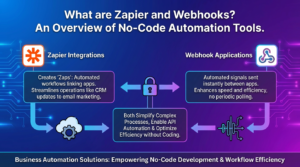
Zapier is a widely used automation platform that facilitates the creation of ‘Zaps’—automated workflows that link two or more apps to carry out a sequence of actions. With a multitude of Zapier integrations available, businesses can streamline operations from CRM updates to email marketing, empowering users to focus on growth rather than mundane tasks.
Webhooks, on the other hand, are automated messages or signals sent from one app to another without manual intervention. Unlike traditional APIs, which require periodic polling, webhook applications respond instantly to events, thereby enhancing the speed and efficiency of API automation.
Both Zapier and webhooks are pivotal in the realm of automation tools as they allow businesses to optimize operational efficiency by simplifying complex processes. To explore more about automation strategies, check our detailed guide on comprehensive n8n automation. For further insights into the automation industry, you might want to read this Forbes article on no-code automation.
How No-Code APIs are Changing Business Automation
No-code APIs are revolutionizing the landscape of business automation, offering unprecedented ease and accessibility. These tools empower businesses to integrate complex systems without a single line of code, streamlining processes and enhancing productivity. When leveraging platforms like Zapier, companies can create powerful Zapier integrations that automate repetitive tasks and connect disparate systems seamlessly.
The advent of no-code development has heralded a new era, where businesses need not rely solely on developer skill sets to automate their operations. With API automation, companies can efficiently manage everything from customer data synchronization to instant alert notifications via webhook applications. Such capabilities simplify workflows, allowing teams to focus more on strategic activities rather than monotonous tasks.
For businesses looking to explore versatile automation tools, educational resources like The Comprehensive n8n Automation Guide 2025 can provide valuable insights. For further reading on strategic implementations, Forbes has discussed the rise of no-code tools in recent years, highlighting their potential in transforming business operations. By reducing dependencies on traditional development practices, no-code APIs are paving the way for more agile, dynamic, and innovative business automation solutions.
Key Benefits of Using No-Code APIs for Businesses
No-code APIs are transforming the way businesses approach automation by making complex processes accessible to non-developers. These tools simplify the integration of different applications, thus bridging the gap between technical and non-technical teams. Here are the key benefits of utilizing no-code APIs:
- Speed and Efficiency: With no-code APIs, businesses can automate workflows faster without the need for extensive coding knowledge. This rapid implementation ensures quicker adaptation to market changes and can greatly enhance productivity.
- Cost-Effective Solutions: Hiring software developers for API integration can be costly. No-code solutions minimize this need, allowing businesses to allocate resources more effectively. As a result, companies can focus their investment on other priority areas. Learn more about cost-effective business tools on Forbes.
- Scalability: No-code development tools like Zapier make scaling automation solutions straightforward. They allow small businesses to expand their operations effortlessly, implementing new Zapier integrations and webhook applications as needed.
- Improved Workflow Automation: These tools enable the automation of routine tasks, freeing up employees to focus on strategic initiatives. By simplifying workflows, companies can enhance overall operational efficiency.
By embracing no-code API solutions, such as those available through platforms like Zapier, businesses can significantly revolutionize how they manage automation, fostering a more dynamic and agile operational model. To dive deeper into automation solutions, explore our Comprehensive n8n Automation Guide.
Getting Started with Automation Using Zapier
Embarking on your business automation journey with Zapier is a game changer. Zapier is an innovative platform that empowers users through its no-code development interface, making it accessible even to those with minimal technical expertise. With this powerful tool, businesses can seamlessly bridge different apps and automate tasks, thus simplifying workflows and boosting productivity.
To get started, you’ll first need to create a Zapier account. Once registered, select the apps you wish to connect—this selection process taps into a wide array of Zapier integrations available to streamline your operations. For instance, you could automate the transfer of leads from a contact form to a CRM, or synchronize your marketing platforms for consistent communication strategies.
- Identify tasks suitable for task automation—common candidates include repetitive data entry and routine notifications.
- Create your first Zap, which consists of a trigger and action. A trigger in one app will cause an action in another app, thereby enabling API automation without coding.
- Explore webhook applications for advanced automation tasks to further enhance your business automation solutions.
For a deeper understanding of workflow automation, consider reading our detailed guide on The Comprehensive N8n Automation Guide 2025. Furthermore, you can find insights on the transformative impact of automation tools in business through reputable sources like Forbes.
Setting Up Your First Zap: A Step-by-Step Guide
Embarking on the journey of workflow automation can be seamless and rewarding when you set up your first Zap with Zapier. This beginner-friendly guide will walk you through the necessary steps to harness the power of no-code APIs and integrate your favorite automation tools efficiently. Perfect for businesses looking to simplify workflows, this guide will have you implementing your first zap in no time.
Start by signing up or logging into your Zapier account. Once logged in, click on the “Make a Zap” button. Choose a trigger app from the available Zapier integrations, which will initiate the automation process. This could range from email notifications to social media updates. Next, select an appropriate trigger event that will kickstart your task automation.
Follow up by setting an action, the second core component of your zap. Choose an action app and the event that will conclude the zap. Once you’ve set these parameters, test the zap to ensure everything runs smoothly. If you’re excited about delving deeper into API automation, consider reading our comprehensive n8n automation guide. For a broader overview, you might find this Forbes article on no-code tools insightful.
Exploring Webhooks: The Backbone of No-Code APIs
Webhooks serve as the backbone of no-code APIs, acting as powerful catalysts for real-time data transfer and automation. Unlike traditional API approaches that require constant polling, webhooks deliver data immediately, triggering events as they happen. This instantaneous response is fundamental in optimizing workflow automation, significantly simplifying workflows and reducing latency.
In the ecosystem of no-code development platforms like Zapier, webhooks are pivotal. They enable seamless integration between disparate systems without writing a single line of code, opening doors to advanced Zapier integrations and other automation tools. Businesses, therefore, leverage webhooks as part of their business automation solutions to streamline processes, enhancing efficiency without deep technical know-how.
The applications of webhooks are expansive. From sending simple notifications to facilitating complex task automation, they ensure that businesses can quickly adapt to changing data landscapes. By incorporating API automation, businesses can focus on strategic growth while the mundane is managed by efficient automation solutions.
In the ever-evolving tech landscape, understanding and utilizing webhooks is essential. They not only simplify integration but also empower businesses to stay agile and competitive. For those interested in delving deeper into this realm, this Forbes article offers insightful perspectives on how automation is revolutionizing the business sector.
Integrating Webhooks with Zapier for Seamless Automation
Integrating webhooks with Zapier opens up a world of possibilities for seamless automation in today’s fast-paced business environment. Zapier, an industry leader in automation tools, facilitates the connection between disparate apps through its robust platform, enabling businesses to automate tasks without the need for complex coding.
When webhooks enter the mix, these connections become more dynamic, allowing real-time data exchange and enhancing business automation solutions. Webhooks are especially beneficial for applications requiring immediate data updates or actions triggered by specific events, making them an ideal choice for businesses seeking to streamline their workflows.
- Real-Time Data Exchange: Webhooks enable instantaneous communication between apps, facilitating immediate task automation and ensuring your business runs smoothly.
- Simplifying Workflows: By setting up webhook applications in Zapier, you can automate repetitive processes and free up valuable resources for more strategic activities.
- No-Code Development: Even without technical expertise, you can easily set up webhook and Zapier integrations, democratizing API automation across your organization.
For those looking to delve deeper into the intricacies of automation, many online resources, like Forbes, offer insightful articles on task automation and workflow optimization. As businesses increasingly move towards no-code development, integrating webhooks with Zapier is a strategic step in staying competitive in the digital age.
Common Use Cases for No-Code API Automation
No-code API automation has emerged as a pivotal element in streamlining business processes. By harnessing tools like Zapier and webhook applications, businesses can integrate various services without writing a single line of code. Let’s explore some common use cases where no-code API automation truly shines.
- Marketing Campaign Management: Automation tools can simplify workflows by integrating CRM platforms with email marketing services, such as Mailchimp. This ensures that leads gathered through landing pages are automatically entered into targeted email campaigns, increasing engagement without manual intervention.
- Customer Support Efficiency: Utilizing Zapier integrations, support tickets generated in one platform can seamlessly flow into another, like moving a complaint in Facebook to a CRM or helpdesk system, ensuring that no customer inquiry goes unattended.
- E-commerce Order Processing: Webhooks can automate tasks like updating inventory levels between a website and warehouse system in real-time, reducing the risk of human error and maintaining customer satisfaction with up-to-date stock information.
For more in-depth automation solutions, visit our Comprehensive n8n Automation Guide 2025. As businesses increasingly adopt no-code development, the landscape of API automation continues to evolve, making it easier to automate tasks and optimize workflows. External sources like Forbes discuss how these innovations are shaping the future of business processes. Embrace API automation today to accelerate your digital transformation journey.
Maximizing Efficiency: Automating Repetitive Tasks with Zapier
In today’s fast-paced business environment, maximizing efficiency is crucial. Automation tools like Zapier provide a seamless way to streamline operations by automating repetitive tasks. With Zapier integrations, businesses can connect different applications without a single line of code, making no-code development more accessible and efficient. By leveraging API automation, professionals can simplify workflows and focus more on strategic tasks.
Zapier stands out as a leading platform for those looking to implement business automation solutions. It offers extensive Zapier integrations that connect with thousands of apps via webhook applications, enabling swift task automation across various business processes. This capability transforms how organizations manage their workflow automation, drastically reducing time spent on manual input while improving accuracy.
For those interested in exploring more about efficient automation, check out our detailed discussion on n8n automation guide. This can serve as a complementary resource to your Zapier efforts, providing a complete picture of automation possibilities.
By incorporating these solutions, businesses not only enhance operational efficiency but also gain a competitive edge. To understand more about the impact of automation on business growth, refer to authoritative resources like Forbes.
Best Practices for Implementing No-Code API Solutions
The surge in no-code API solutions, particularly through platforms like Zapier and webhook applications, has transformed how businesses approach automation. To maximize the benefits of these automation tools, it’s crucial to adhere to certain best practices. Here’s how you can streamline your workflow automation efficiently.
Understand Your Business Needs
Before diving into no-code development, assess your business automation requirements. Identify tasks that can benefit from API automation and align your strategies with your overarching business goals. Successful implementation depends on a clear understanding of how automation can simplify workflows and increase productivity.
Choose the Right Tools
Selecting the appropriate no-code API solutions is paramount. Tools like Zapier integrations offer extensive capabilities for task automation. Evaluate options based on the specific needs of your tech stack. For comprehensive guidance on choosing the right automation tools, explore our n8n automation guide.
Iterate and Optimize
Constant iteration is key to effective workflow automation. Start with a pilot project, analyze the outcomes, and refine your processes accordingly. Continuous optimization guarantees that your no-code solutions stay aligned with evolving business pressures and technological advances. For further insights on adapting to recent tech developments, consult resources from respected outlets such as MIT Tech Review.
Troubleshooting Common Issues with Zapier and Webhooks
The rise of no-code APIs, particularly with tools like Zapier and webhooks, has revolutionized business automation. However, even the most robust automation tools are not immune to occasional hiccups. Understanding how to troubleshoot common issues can help streamline your APIs and ensure seamless workflow automation. Here are some common problems and their solutions:
1. Authentication Errors
Authentication errors are among the most frequent issues encountered in API automation. Typically, they occur due to incorrect API keys or expired tokens. To resolve this, double-check your API credentials and refresh them as necessary. If using webhooks, make sure the endpoint URL and credentials are correctly configured. For more detailed guidance on fixing related issues, you may find our n8n workflow guide helpful.
2. Misconfigured Triggers and Actions
Sometimes, Zapier integrations fail to work because the triggers or actions are not properly set up. Ensure that conditions for triggering an event are clearly defined and logically arranged. Double-check your triggers to ensure they’re firing under the correct conditions by testing each Zap individually. According to Forbes, simplicity in setting these parameters is crucial in effectively simplifying workflows with no-code development.
3. Data Formatting Issues
Inconsistent or incompatible data formatting can disrupt your webhook applications. Ensure that data input and output are consistently formatted to prevent data loss or corruption. Using JSON format commonly solves many such issues, as it is widely supported and straightforward to validate. Tools offering builder functions, like Zapier’s built-in formatters, can assist in converting data formats automatically.
4. Performance Lag
Workflow automation can sometimes cause delays due to large volumes of data or complex Zap configurations. To alleviate performance lag, try breaking down larger processes into smaller, more manageable Zaps. Adjust your task automation schedules to optimize execution times and consider using filters to limit unnecessary tasks. For broader insights into optimizing automation, visit our comprehensive guide on n8n automation.
The Future of No-Code APIs: Trends to Watch
The world of no-code APIs is continually evolving, with several intriguing trends emerging on the horizon. As businesses strive to streamline processes, the integration of business automation solutions remains a priority. One notable trend is the increasing adoption of AI-powered automation tools. These tools enhance the capabilities of no-code APIs, enabling businesses to achieve more complex workflow automation without the need for extensive coding knowledge.
Another trend to watch is the exponential growth of Zapier integrations and webhook applications. Companies like Zapier are continually expanding their library, allowing users to connect even more disparate systems effortlessly. This expansion is vital for simplifying workflows and fostering innovation across various industries.
Furthermore, the demand for enhanced API automation is driving the development of more sophisticated no-code platforms that cater to specific industry needs. As these platforms become more versatile, we expect to see a shift towards greater customization and flexibility in business automation solutions.
- Increased use of AI in task automation
- Expansion of integration libraries like Zapier
- Greater emphasis on industry-specific no-code development
As these trends evolve, the role of no-code technologies in the automation tools landscape will only become more pronounced. To stay updated on these advancements, it’s beneficial to consult authoritative sources like Forbes for expert insights.
Security Considerations for Using Zapier and Webhooks
When adopting no-code development tools like Zapier and webhook applications, it’s crucial to prioritize security to protect your business operations. As these automation tools simplify workflows and enable seamless API automation, they can also become vulnerable points if not used cautiously. Zapier integrations, while powerful, require thoughtful configuration to safeguard data and privacy.
Here are some key security considerations for using Zapier and webhooks:
- Data Sensitivity: Evaluate the sensitivity of the data being exchanged. Ensure that no sensitive information is included in webhook payloads unless necessary.
- Authentication: Implement robust authentication mechanisms for your webhooks. Use tokens or API keys to ensure that only authorized requests are processed.
- HTTPS: Always use HTTPS endpoints for your webhooks to encrypt data in transit. This prevents interception by unauthoritized parties.
- Access Controls: Regularly update and manage user permissions within your Zapier accounts and other associated business automation solutions.
By integrating these security measures, businesses can confidently leverage automation tools like Zapier to enhance their workflow automation. For further reading, explore the comprehensive guide on n8n automation to boost your tech stack’s efficiency. Additionally, check out this Forbes article for more insights on data security practices.
Conclusion: Embracing the Power of No-Code APIs for Business Growth
The rise of no-code APIs is revolutionizing how businesses approach automation and efficiency. Platforms like Zapier and webhooks simplify the complexities of workflow automation, allowing companies to focus more on innovation and less on mundane tasks. By leveraging automation tools, businesses can streamline processes, increase productivity, and drive growth without the need for extensive technical expertise.
Incorporating these business automation solutions into your operations enables you to unlock the full potential of
no-code development. Whether it’s through API automation with Zapier integrations or utilizing webhook applications, the possibilities for task automation are endless. When these tools are combined, they significantly contribute to enhancing your overall business efficiency.
For companies interested in expanding their knowledge on automation, consider exploring our Comprehensive n8n Automation Guide 2025 to further refine your workflow strategies. As you continue your journey, remember that embracing innovation with tools like these is critical. For more insights into the future of automation, check out what experts have to say on Forbes about no-code automation tools. Embrace the future today and watch your business soar to new heights.