


Introduction to DNS-over-HTTPS (DoH)
In the ever-evolving landscape of internet privacy, DNS-over-HTTPS (DoH) emerges as a crucial technology. It is designed to improve your network security by encrypting DNS queries through the HTTPS protocol. This ensures that the translation of domain names into IP addresses is kept private and secure from eavesdroppers. Traditionally, DNS queries have been a weak link in browsing security because they were transmitted in plain text. With DoH, these queries are encrypted, enhancing encrypted DNS privacy.
For those concerned with online safety and privacy protection, understanding and enabling DNS-over-HTTPS is vital. By securing DNS queries, DoH prevents third parties from logging your online activities and provides a layer of DNS encryption that was previously missing in standard practices. To deepen your understanding of other cybersecurity practices, you might be interested in exploring 7 Cybersecurity Myths That Put You At Risk in 2025. For more technical details about DNS-over-HTTPS, the Mozilla Developer Network offers an extensive guide.
How Does DNS-over-HTTPS Work?
The concept of DNS-over-HTTPS (DoH) revolves around enhancing your internet privacy and overall network security by encrypting DNS queries. Traditionally, DNS translates user-friendly domain names into IP addresses, facilitating web browsing. However, these translations have been performed in plain text, making them susceptible to eavesdropping. DoH mitigates this vulnerability by using HTTPS protocols to encrypt DNS queries. This means your browser communicates securely with a DoH-compatible server, making it difficult for third parties to intercept or manipulate your traffic.
To set up DNS-over-HTTPS, your device sends encrypted DNS queries over the HTTPS connection established between your browser and server, ensuring browsing security and adding a layer of privacy protection. Enabling DoH is a straightforward process and is often just a matter of changing settings in your browser or operating system. This mechanism not only enhances online safety but also promotes DNS privacy by shielding your web activities from entities like ISPs and hackers.
As cyber threats evolve, ensuring secure DNS practices is becoming increasingly crucial. For more insights into modern cybersecurity and to debunk myths that might put you at risk, explore our article on 7 Cybersecurity Myths That Put You At Risk in 2025. Additionally, authoritative resources like Cloudflare’s guide on DNS-over-HTTPS Implementation provide comprehensive insights into leveraging DoH for enhanced protection.
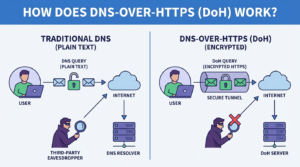
Key Differences Between DoH and Traditional DNS
Understanding the key distinctions between DNS-over-HTTPS (DoH) and traditional DNS is vital for anyone concerned about internet privacy and networking. Traditional DNS queries are sent in plain text over the internet, making them vulnerable to interception by malicious actors, which compromises network security. In contrast, DoH enhances browsing security by employing DNS encryption, ensuring secure DNS look-ups by encrypting these queries within HTTPS data packets.
One of the main advantages of DoH is enhanced privacy protection. While traditional DNS is prone to eavesdropping, encrypted DNS offered by DoH ensures that your online activities remain confidential, significantly boosting online safety. This encryption layer makes it harder for anyone to track your internet usage, offering superior DNS privacy compared to traditional methods. For more insights on protecting your online identity and passwords, consider checking our article on dark web password checks.
Moreover, DoH provides an additional layer of flexibility, as it can be executed via an HTTPS connection across various networks without the constraints faced by legacy DNS systems. This means better compatibility with modern web security norms and improved performance metrics. For a comprehensive understanding of DoH and its importance, you can refer to reputable resources such as Cloudflare’s guide on DNS-over-HTTPS.
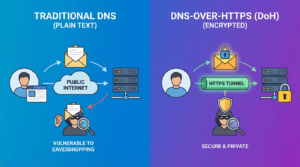
The Evolution of Internet Protocols: Why DoH Matters
The landscape of internet communication has transformed dramatically since its inception, with internet protocols evolving to prioritize user privacy and security. DNS-over-HTTPS (DoH) has emerged as a crucial development in this evolution to enhance encrypted DNS transactions. A traditional Domain Name System (DNS) query is unencrypted, leaving user data exposed. In contrast, DoH combines the functionality of HTTPS with DNS, providing secure DNS requests, thereby bolstering network security.
By implementing DoH, users can shield their online activities from prying eyes, fostering a safer browsing experience. This innovation not only supports DNS privacy but also contributes significantly to internet privacy and browsing security. As you consider updating your online security measures, don’t overlook how DoH can be a game-changer in enhancing privacy protection.
For a deeper understanding of how these security enhancements could impact your digital life, you might find insights in our article on debunking common cybersecurity myths. To learn more about DNS-over-HTTPS and its impact globally, visit Cloudflare for expert insights.
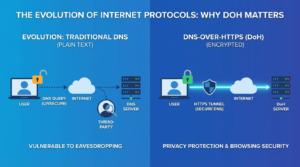
Benefits of Enabling DNS-over-HTTPS
Embracing DNS-over-HTTPS (DoH) paves the way for enhanced internet privacy and robust network security. By enabling DoH, you ensure that your DNS queries are encrypted, making it significantly more challenging for malicious actors to intercept or alter your internet activities. This added layer of privacy protection defends against common cyber threats and eavesdropping tactics.
Secure DNS communication is at the heart of DoH. It uses HTTPS protocol to send DNS queries, keeping your browsing safe from prying eyes. This shields your data from traditional vulnerabilities associated with unencrypted DNS requests. As cyber threats evolve, incorporating DNS encryption becomes a pivotal step toward comprehensive online safety and DNS privacy.
- Browsing security: Protects sensitive data from being exposed.
- Improved privacy protection: Guards against DNS hijacking and tracking.
- Enhanced internet privacy: Makes it difficult for ISPs to track your browsing habits.
Enabling DoH not only fortifies your online defenses but also aligns with a holistic cybersecurity strategy. For further insights into maintaining digital safety, explore our guide on Cybersecurity Myths. Additionally, consider accessing an external resource such as Cloudflare’s guide on DNS-over-HTTPS to expand your understanding of its benefits.
Enhanced Privacy with DNS-over-HTTPS
In our digital age, online privacy is a top priority. DNS-over-HTTPS (DoH) is a breakthrough technology that enhances privacy by encrypting DNS queries. This secure DNS method prevents eavesdroppers from tracking your online activities, contributing significantly to internet privacy and browsing security. By encrypting DNS traffic, DoH adds a critical layer of protection, ensuring that your data remains secure from prying eyes and potential cyber threats.
With DoH, internet users benefit from improved DNS privacy as their queries are encrypted and transmitted over the HTTPS protocol. This means your requests for website addresses are kept confidential between your device and the DNS server. Such DNS encryption is pivotal for anyone concerned about privacy protection and online safety.
Incorporating DNS-over-HTTPS in your network security strategy is more accessible now than ever. To understand better how this fits into broader cybersecurity measures, consider exploring our in-depth article on 7 Cybersecurity Myths that Put You at Risk in 2025.
For more comprehensive information on DoH, external authoritative sources such as Cloudflare’s guide on DNS-over-HTTPS offer extensive insights into its implementation and benefits.
Improved Security Features of DoH
DNS-over-HTTPS (DoH) is revolutionizing the way we approach network security and internet privacy. By encrypting DNS queries, DoH provides a secure DNS solution that shields your online activities from prying eyes. This enhanced DNS encryption effectively prevents eavesdroppers from intercepting and viewing your browsing data, thus boosting your online safety and privacy protection.
One of the key benefits of adopting DoH is that it reduces the risk of various cyber attacks, such as man-in-the-middle attacks. By ensuring that DNS resolutions are both encrypted and authenticated, DoH significantly strengthens browsing security. For those concerned about privacy, the seamless integration of encrypted DNS within the browsing process is a game-changer, making DoH a critical tool for maintaining DNS privacy.
- Prevents data interception: Encrypts DNS queries to prevent unauthorized access.
- Enhances privacy: Hides browsing activities from ISPs and potential attackers.
- Improves internet security: Protects against DNS spoofing and data manipulation.
For more insights on keeping your online presence secure, you can explore our article on securing your online identity.
To delve deeper into how DoH works and why it’s crucial for your privacy, visit Cloudflare’s guide on DNS-over-HTTPS.
How DNS-over-HTTPS Protects Against Man-in-the-Middle Attacks
DNS-over-HTTPS (DoH) significantly enhances network security by encrypting DNS queries, rendering them almost impervious to Man-in-the-Middle (MitM) attacks. In a traditional DNS setup, queries are transmitted in plain text, making it easy for cybercriminals to intercept and manipulate this data. A MitM attack occurs when unauthorized entities intercept communication between two parties to steal information or inject malicious content.
By employing DNS-over-HTTPS, these queries are sent over an encrypted HTTPS connection, safeguarding your online activities from eavesdropping and tampering. This secure DNS approach ensures that your browsing remains private and secure, adding a crucial layer of internet privacy and privacy protection against potential threats.
Furthermore, adopting DoH can substantially improve your online safety by maintaining a more secure and encrypted DNS connection, which is pivotal for DNS privacy and browsing security. For users keen on fortifying their complete cybersecurity posture, it’s vital to explore comprehensive measures. Learn more about these strategies in our article on 7 cybersecurity myths that put you at risk in 2025.
To delve deeper into the technicalities and the importance of DNS-over-HTTPS, you might find this Cloudflare guide on DNS-over-HTTPS insightful. This authoritative resource provides a more detailed exploration of how DoH fortifies network security against MitM attacks.
Compatibility: Browsers and Operating Systems Supporting DoH
DNS-over-HTTPS (DoH) is revolutionizing online safety by ensuring secure DNS queries through encryption. Browsers and operating systems play a critical role in supporting this technology to bolster internet privacy and browsing security. Currently, leading browsers such as Google Chrome, Mozilla Firefox, and Microsoft Edge are actively supporting DoH, allowing users to experience enhanced network security through DNS encryption.
Without the right support, enabling DoH might seem complex. Luckily, many modern operating systems such as Windows 10, Windows 11, macOS, and various Linux distributions offer built-in support for encrypted DNS, making the transition towards a more secure DNS simple. Users can take proactive steps by following easy-to-enable settings within browsers or system preferences, fostering improved DNS privacy.
As technology progresses, compatibility with DoH continues to expand, aiming to make privacy protection more accessible. Stay informed about advancements in DoH support through reliable sources and personal experimentation. For a deeper insight into securing your online identity, you might find our Dark Web Password Check helpful.
To learn more about enabling DNS-over-HTTPS and the browsers that support it, you can explore Cloudflare’s comprehensive guide on this subject.
Step-by-Step Guide: How to Enable DoH in Your Browser
DNS-over-HTTPS (DoH) enhances your online safety by encrypting DNS queries, leading to improved internet privacy and secure DNS practices. Here’s how you can enable DoH in your browser for increased browsing security and privacy protection.
1. Google Chrome
Start by opening Google Chrome and navigating to the settings menu. Click on “Privacy and Security” and choose “Security”. Scroll down to the “Use secure DNS” section and switch the toggle to the “On” position. Choose a provider or enter a custom encrypted DNS provider for enhanced DNS encryption and DNS privacy.
2. Mozilla Firefox
Launch Firefox and click on the menu button, then select “Options”. Scroll down and click on “Settings” in the “Network Settings” section. Check the box for “Enable DNS over HTTPS” and choose a provider from the dropdown menu or add a custom provider for better network security.
3. Microsoft Edge
Open Microsoft Edge, then go to Settings > Privacy, search, and services. Locate the “Use secure DNS” under the “Security” section and turn it on for encrypted DNS transmissions. Select from the list of DoH providers or configure a custom service to bolster your internet privacy.
Whether you use Chrome, Firefox, or Edge, enabling DoH is a straightforward process that significantly boosts privacy protection. For more insights on safeguarding your digital identity, check out our guide on the Dark Web Password Check.
Implementing DoH is a powerful step toward online safety. For further reading on how DNS-over-HTTPS can protect you, see this detailed Mozilla guide on DoH.
Top Reasons to Adopt DNS-over-HTTPS Today
In an era where internet privacy is paramount, DNS-over-HTTPS (DoH) provides an essential layer of protection for your online activities. Its primary advantage lies in the use of encrypted DNS queries, ensuring that your web browsing remains private and secure. Below are the top reasons to make the switch to DNS-over-HTTPS today.
- Enhanced Network Security: By encrypting DNS queries, DoH protects you from potential interception by malicious actors. This secure DNS protocol ensures that sensitive information, such as the websites you visit, is shielded from prying eyes.
- Improved Privacy Protection: Traditional DNS queries are sent in plain text, leaving them vulnerable to surveillance and tracking. With DoH, you’ll benefit from DNS privacy that keeps your online activities discreet and secure.
- Boosted Browsing Security: Utilizing DNS encryption, DoH guards against man-in-the-middle attacks and prevents attackers from redirecting your traffic to malicious sites. This ensures your online safety and peace of mind.
As you consider these benefits, it’s also crucial to debunk common cybersecurity myths that could put you at risk. Feel free to explore more about these myths and protect your digital presence efficiently.
For further insights into the importance of DNS-over-HTTPS, visit this comprehensive resource from Cloudflare, an authority in internet security solutions.
Potential Drawbacks and Criticisms of DNS-over-HTTPS
While DNS-over-HTTPS (DoH) offers significant enhancements in network security and internet privacy, it is not without its criticisms. One major concern revolves around the centralization of DNS queries. DoH typically routes these through well-known DNS providers, potentially placing a large amount of control in the hands of a few entities. This centralization can conflict with the decentralized nature of the internet, possibly affecting privacy protection efforts.
Another common criticism is the impact on browsing security. By encrypting DNS traffic, network administrators may find it challenging to monitor and filter content, which can be essential for maintaining online safety and enforcing organizational policies. Additionally, some argue that DoH could interfere with mechanisms designed to protect against malicious sites, as these often rely on unencrypted DNS queries for blocking purposes.
Moreover, while DoH strengthens DNS encryption, it may introduce complexity in troubleshooting network issues. This can be particularly problematic for businesses without advanced IT resources. For more insights into network-related challenges, you might read about solutions to slow Wi-Fi issues in 2025 on our Bytefixes blog, where we discuss network troubleshooting strategies.
For further reading on the benefits and implementation of DoH, you can refer to this comprehensive guide on Mozilla’s official site. This source offers detailed insights that can help users make informed decisions about deploying DoH.
Comparing DNS-over-HTTPS and DNS-over-TLS
When considering DNS encryption technologies, two prominent protocols surface: DNS-over-HTTPS (DoH) and DNS-over-TLS (DoT). Both ensure network security by encrypting DNS queries and responses, but they differ in implementation and use cases.
DNS-over-HTTPS (DoH) transmits DNS requests via the HTTPS protocol, integrating DNS queries with typical web traffic. This enhances internet privacy as ISPs can’t easily distinguish these requests from regular web traffic. Consequently, enabling DoH can seamlessly improve online safety without needing significant network reconfiguration. For those interested in the broader implications of secure technology, our cybersecurity myths blog offers more insights on privacy protection trends.
On the other hand, DNS-over-TLS operates as a separate channel, exclusively utilizing the TLS protocol to encrypt DNS traffic. This separation can be beneficial for organizations prioritizing strict DNS privacy controls, though setting up may require a more sophisticated infrastructure.
While both protocols enhance browsing security and protect against man-in-the-middle attacks, choosing between DoH and DoT depends on specific needs—whether seamless integration or rigid privacy controls are paramount.
The Future of Internet Security with DNS-over-HTTPS
As the digital landscape evolves, so do the methods for ensuring secure online experiences. DNS-over-HTTPS (DoH) stands at the forefront of this evolution, promising a new era in internet security. With the increased need for online safety and privacy protection, the technology facilitates encrypted DNS queries, safeguarding sensitive data from potential onlookers.
The implementation of secure DNS protocols such as DoH is pivotal in enhancing network security and ensuring browsing security that aligns with modern privacy needs. By encrypting DNS requests, it prevents interception by malicious actors, thus maintaining DNS privacy. Businesses and individuals alike can benefit immeasurably from reduced vulnerabilities and improved privacy protection.
As we move forward, integrating technologies like DoH will be crucial in the fight against cyber threats. It’s wise to stay informed on these developments to ensure one’s online activities remain protected in the future. To deepen your understanding of cybersecurity trends, check our insightful post on Cybersecurity Myths. For comprehensive guidelines on how to set up DoH, many reputable sources such as Cloudflare provide detailed instructions.
Real-World Examples: Successful Implementations of DoH
DNS-over-HTTPS (DoH) has been successfully implemented by several major tech companies, effectively boosting network security and internet privacy for their users. A prime example is Mozilla, which has integrated DoH into its Firefox browser. This move offers secure DNS by default, ensuring browsing security through DNS encryption and protecting users from potential privacy intrusions.
Google is another key player that has rolled out DoH support in its Chrome browser, further cementing the importance of DNS privacy in enhancing online safety. By utilizing encrypted DNS, Google has made strides in safeguarding users from malicious online activities, offering a robust layer of privacy protection.
Incorporating encrypted DNS protocols such as DoH is essential in the continual fight for online safety. If you’re looking to deepen your understanding of how to secure your online identity, consider exploring our insights on the latest trends in cybersecurity, like our article on securing your online identity.
For more detailed insights into DNS encryption and its benefits, the Cloudflare website is an excellent external resource. It provides a comprehensive overview of DoH and its positive impact on browsing security.
Conclusion: Embrace DNS-over-HTTPS for a Safer Internet Experience
In today’s digitally interconnected world, prioritizing browsing security and internet privacy is crucial. Adopting DNS-over-HTTPS (DoH) plays a pivotal role in enhancing your online safety through encrypted DNS queries. By safeguarding your internet activities from prying eyes, DoH provides robust privacy protection and strengthens network security.
Not only does DoH secure your DNS requests, but it also helps mitigate various cyber threats and enhance DNS privacy. By encrypting DNS queries, your online identity becomes significantly more secure, ensuring that your browsing data is protected from malicious entities. This shift towards secure DNS practices is essential in today’s landscape, where data confidentiality is continually under threat.
While implementing DoH is a commendable step, it’s possible to expand your understanding of online security through comprehensive resources. For those interested in further securing their digital experiences, explore our insights on managing and protecting your online identity by checking our article on securing your online identity on the dark web.
To delve deeper into the technical and practical aspects of DoH, consider visiting authoritative resources, such as Cloudflare’s guide on DNS-over-HTTPS, which offers detailed insights into how DoH functions and why it is vital for online safety.