

Introduction to Cybersecurity Myths
In the digital age, cybersecurity is more critical than ever. However, navigating the landscape of cyber threats can be challenging, especially when faced with numerous cybersecurity myths that cloud our understanding of online safety. With new threats emerging each year, it’s crucial to dispel these internet security fallacies to safeguard personal and organizational data.
By 2025, the evolution of cyber threats will surpass our old assumptions, leaving many unprepared for the reality of digital vulnerabilities. Unfortunately, prevalent digital safety myths create a false sense of security, leaving individuals and businesses exposed to potential breaches. It’s vital to recognize these common security myths to implement effective protection measures, such as building a reliable home server for secure data management.
Understanding these cybersecurity risks requires a proactive approach. The misconceptions about network protection are varied, often stemming from outdated practices or misinformation. For accurate and up-to-date information on cybersecurity, it’s beneficial to refer to trusted sources such as StaySafeOnline.org.
To fully grasp the threats lurking in the internet shadows, we need to peel back the veil of cybersecurity myths. Only by challenging and updating these beliefs can we protect ourselves from the increasingly sophisticated cyber threat landscape of 2025.
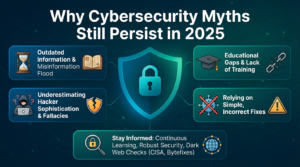
Why Cybersecurity Myths Still Persist in 2025
In 2025, amidst rapid technological advancements, cybersecurity myths continue to thrive. These digital safety myths often stem from outdated information or a lack of awareness, hindering effective online protection. Such cybersecurity risks are exacerbated by a flood of misinformation online. The everyday user often relies on common security myths because they offer simple—and incorrect—answers to complex IT security challenges.
Firstly, despite widespread reports on cyber threats, many still underestimate the sophistication of hackers. This ignorance leads to online safety misconceptions where users believe that basic antivirus software alone can safeguard their data. Additionally, the anonymity of the internet allows internet security fallacies to spread without accountability. In our search for quick fixes, we often ignore robust, layered security approaches.
Educational gaps also play a significant role. Many organizations and individuals lack access to up-to-date cybersecurity training, which leaves room for network protection myths to flourish. Addressing these myths requires continuous learning and adaptation to new threats. For example, if you’re concerned about your online identity’s safety, consider checking resources like Dark Web Password Check: Secure Your Online Identity for more guidance on maintaining robust cybersecurity.
To combat these myths, staying informed is crucial. For deeper insights, institutions like CISA offer reliable resources to help debunk cyber threat misconceptions and promote authentic digital safety practices.
The Cost of Believing Cybersecurity Myths
In an era dominated by digitization, the cost of subscribing to cybersecurity myths is increasingly high. These misconceptions often lead to inadequate protection, leaving individuals and businesses exposed to significant cybersecurity risks. Believing in common security myths can result in severe financial loss, reputational damage, and compromised personal data. Ignorance is risky, and awareness—coupled with proactive measures—is essential for safeguarding digital assets.
Consider this: if you dismiss digital safety myths under the false assumption that “it won’t happen to me,” you risk becoming an easy target for cyber threats. By dispelling internet security fallacies, you can take appropriate actions to enhance your online safety. For instance, understanding that not all Wi-Fi networks are secure can protect you from potential data breaches and attacks.
Beyond personal assets, businesses face even greater stakes. Misjudging cyber threat misconceptions can lead to operational disruptions and loss of customer trust. Companies need to invest time and resources to correct these false beliefs and secure their environments effectively. For tech enthusiasts interested in improving their cybersecurity setup, our detailed article on enhancing your home network protection is a must-read: Why Your WiFi Is Suddenly Slow in 2025 & Fixes.
It’s crucial to stay informed by consulting reliable resources. Organizations like the Cybersecurity and Infrastructure Security Agency (CISA) provide valuable insights for mitigating cybersecurity risks. By learning from credible sources, you can effectively counter IT security myths and enhance your overall network protection strategies.
Myth #1: Antivirus Software Alone is Enough
One of the most persistent digital safety myths is that simply installing antivirus software will provide complete protection against all cybersecurity risks. While having antivirus software is a crucial component of your security strategy, relying solely on it can leave you vulnerable to multiple threat vectors that are beyond its scope.
Antivirus solutions primarily focus on detecting malware threats, but the landscape of cyber threats has drastically evolved. Today, cybercriminals employ a variety of tactics such as phishing, ransomware, and social engineering that require additional protective measures. These are common security myths that can lead to complacency in maintaining robust online safety protocols.
For comprehensive internet security, a multi-layered approach is necessary. This includes using strong, unique passwords, enabling two-factor authentication, keeping all software updated, and being aware of potential online safety misconceptions. Additionally, consider advanced security training and awareness programs to empower yourself and your organization against evolving threats.
For more insights on protecting your online identity, visit our article on checking passwords on the dark web. To further fortify your understanding of cybersecurity, the National Cybersecurity Alliance offers a comprehensive guide on the latest best practices.
Myth #2: Cyber Attacks Only Target Large Companies
One of the most persistent online safety misconceptions is that cyber attacks are solely a problem for large corporations. This dangerous belief can leave small businesses and individuals vulnerable to cybersecurity risks. In reality, cybercriminals often target smaller entities because they typically have weaker security measures, making them easier prey. It’s important to debunk these IT security myths to foster a culture of vigilance across all business sizes.
Small businesses and individual users might not store millions of sensitive customer records, but they still house valuable information. Hackers can exploit these vulnerabilities to steal personal data, financial information, or even launch attacks on larger networks through compromised smaller systems. Therefore, understanding that cyber threats can affect anyone is crucial in addressing these network protection myths.
Boosting your knowledge about cybersecurity is a vital step. By improving your digital safety practices, you can reduce potential risks. For those interested in bolstering their network security, try exploring our guide on AI malware detection to enhance your protective strategies.
For more insights and statistics on how small businesses are also targeted by cyber threats, visit the Cybersecurity and Infrastructure Security Agency for detailed guidelines and support.
Myth #3: Strong Passwords Guarantee Security
While strong passwords are a critical component of cybersecurity, relying solely on them is among the most common security myths. Many users believe that a lengthy, complex password is the ultimate safeguard against cyber threats; however, this assumption overlooks the multifaceted nature of internet security. In 2025, cybercriminals are becoming more sophisticated, employing various techniques that extend beyond just password cracking.
A prominent example of this is phishing attacks, where hackers trick individuals into revealing passwords, regardless of their strength. Additionally, data breaches can lead to password leaks, rendering even the most secure credentials vulnerable. Therefore, it’s essential to combine strong passwords with additional layers of security, such as two-factor authentication (2FA).
For further tips on securing your online identity effectively, consider checking out our guide on protecting yourself from dark web threats. Understanding these cybersecurity risks is vital in dispelling online safety misconceptions.
For more detailed insights into holistic digital protection strategies, the National Cyber Security Centre offers extensive guidance on password security.
Myth #4: Only Government Sites Face Serious Threats
It’s a common misconception that only government sites face serious cybersecurity threats. In reality, cybercriminals target a wide range of entities, including small businesses, personal blogs, and e-commerce sites. The myth that lesser-known websites are immune to attacks can leave you highly vulnerable. With the rapid advancement of technology and the integration of AI tools in 2025, and more information stored online, every website is a potential target.
Cybersecurity risks are not limited to government institutions. Attackers often aim for softer targets that lack robust security measures, such as small and medium-sized enterprises (SMEs). These organizations might not have dedicated IT staff or sophisticated defenses, making them attractive to hackers seeking quick gains.
Ignoring this myth can lead to severe consequences, including data breaches and financial loss. It’s crucial to debunk such online safety myths and implement robust security practices, regardless of the size or nature of your online presence. For more insights into risk management and preventing cyber threats, resources like CISA offer invaluable information to help secure your digital environment.
Myth #5: Cybersecurity is IT’s Responsibility
One of the most pervasive cybersecurity myths in 2025 is the notion that safeguarding a company’s digital assets is solely the responsibility of the IT department. While IT professionals play a crucial role in implementing technical defenses, this internet security fallacy overlooks the fact that cybersecurity is a shared responsibility. In today’s interconnected workspace, each employee is on the front line, either contributing to the protective barrier or inadvertently poking holes in it.
Cybersecurity risks don’t just stem from malicious external forces but also from insider threats like phishing and poor password management. Everyone in the organization must understand basic online safety practices. Empowering every employee with the right tools and knowledge to recognize and report cyber threat misconceptions can significantly reduce risks. Investing in regular training and awareness programs for staff can transform cybersecurity from an IT security myth to an organization-wide culture of vigilance.
For more insights on safeguarding online identity, check out our guide on dark web password checks. And for authoritative external resources, the Cybersecurity and Infrastructure Security Agency (CISA) provides valuable guidelines on collective digital safety practices.
Myth #6: My Company is Too Small to be Targeted
One of the most dangerous online security myths is the belief that small companies are immune to cyber threats. In truth, no business is exempt from cybersecurity risks. In 2025, small and medium-sized enterprises (SMEs) are often portrayed as lucrative targets by cybercriminals due to their perceived lack of robust security measures. Ignoring this reality can propel your company into a vulnerability spiral.
Small businesses are often perceived as less protected, making them attractive to hackers who exploit common security myths such as this one. With the proliferation of online security myths, it’s crucial to dismantle this misconception. Digital safety myths can lead to underestimations of potential cyber threats, placing sensitive data and financial assets at unnecessary risk.
Remember, cybersecurity isn’t solely the domain of large corporations. In fact, focusing on network protection myths can arm your business with the proactive strategies needed to ward off attacks. Discover how evolving technologies like AI-driven malware detection can be instrumental in fortifying your defenses. For additional insights into why all businesses must prioritize cybersecurity, you may consider browsing comprehensive articles from authorities like CISA to understand critical IT security myths.
Myth #7: VPNs Make You Completely Anonymous Online
With the growing concerns over privacy, many people turn to Virtual Private Networks (VPNs) believing they provide complete anonymity online. However, the reality is that while VPNs do offer a layer of protection, making you truly anonymous is one of those common security myths. VPNs primarily encrypt your data and mask your IP address, enhancing privacy from prying eyes and potentially dangerous sites. They are critical tools in minimizing cybersecurity risks, but they are not foolproof.
Being fully anonymous online involves multi-layered approaches beyond a VPN. Your actions, browsing habits, and the type of sites you visit also contribute to your digital footprint. It’s crucial to remember that VPN providers themselves can have access to your online activities. According to TechRadar, choosing a reputable VPN that does not log your data is essential for maintaining your privacy.
To mitigate internet security fallacies, complement your VPN use with other privacy practices, such as using secure browsers, enabling two-factor authentication, and regularly checking for data breaches. For further insight into protecting online identities, consider visiting our detailed guide on securing online identities: Dark Web Password Check: Secure Your Online Identity.
Real-Life Consequences of Ignoring Cybersecurity Threats
The real-world implications of neglecting cybersecurity threats are severe, highlighting the dangers posed by persistent cybersecurity risks. Many businesses and individuals fall victim to common security myths, which lead to a false sense of safety. Unchecked, these misconceptions can result in devastating data breaches, financial losses, and irreversible damage to reputations.
Ignoring cybersecurity could expose sensitive information, leading to identity theft or business espionage. For example, a small vulnerability in your network could allow attackers to siphon personal data, wreaking havoc through unauthorized financial transactions. Cyber threat misconceptions often result in underestimating the mercurial nature of digital threats, leaving even the most secure systems vulnerable to exploitation.
Moreover, these oversights can have cascading effects, such as service disruptions and regulatory fines for non-compliance with data protection laws. Our article on how to detect and remove new Android malware offers insights into one aspect of these pervasive threats. To further arm yourself against the risks of online safety misconceptions, exploring authoritative resources like Cyber Security Essentials can prove invaluable.
As you navigate the digital realm, staying informed and proactive about these real-world consequences is essential for maintaining robust online defenses and safeguarding your digital assets.
Recent Cybersecurity Breaches: Lessons Learned in 2025
The landscape of cybersecurity in 2025 has been defined by several high-profile breaches that underscore the importance of debunking common security myths. Notable incidents from this year include the massive data leaks at leading tech firms and financial institutions. These breaches highlight that relying solely on outdated security practices is a cybersecurity risk itself.
One lesson learned is the critical need for multi-layered security strategies. Relying on a single defense mechanism is akin to embracing internet security fallacies. Companies that believed their simple firewalls were impenetrable found themselves vulnerable when attacks became increasingly sophisticated.
Moreover, there is a growing realization that cybersecurity is not just an IT department concern, but an organization-wide priority. Employee awareness plays a crucial role in mitigating cyber threat misconceptions. Training employees to recognize phishing attempts and practice good digital hygiene can drastically reduce breaches.
To bolster your online security measures, check out how advanced AI tools can help in detecting malware by visiting our guide on AI malware detection with Python.
For more on the importance of cybersecurity and how to protect yourself from digital safety myths, consult expert resources such as Cybersecurity Guide.
Identifying and Debunking Cybersecurity Myths
In today’s digital age, distinguishing fact from fiction is crucial to maintaining robust cybersecurity. The rise in cyber threats has perpetuated numerous common security myths that can severely undermine your online safety. Understanding and debunking these online security myths is the first step toward a more secure digital presence.
Common Cybersecurity Myths
- Myth 1: My Business is Too Small to Be Targeted by Cybercriminals – Cybercriminals cast wide nets, and small businesses often lack the resources to mount effective defenses, making them appealing targets.
- Myth 2: Antivirus Software is All I Need – While crucial, antivirus software is only one part of a multilayered defense system. Comprehensive cybersecurity includes firewalls, regular updates, and employee training.
- Myth 3: Passwords Protect Everything – This digital safety myth overlooks the need for multifactor authentication and strong, unique passwords. Even the most complex password can be compromised without additional security measures.
Awareness and proactive measures are key to guarding against these cybersecurity risks. To deepen your understanding, check out our guide on solving common WiFi issues to ensure your network’s protection.
For a comprehensive guide on addressing more myths and enhancing your cybersecurity posture, explore resources like the Cybersecurity and Infrastructure Security Agency for expert insights.
Proactive Steps to Strengthen Your Cybersecurity
Staying ahead of cybersecurity risks is crucial in a digital landscape teeming with online safety misconceptions and internet security fallacies. To protect yourself from common security myths and cyber threat misconceptions, embracing proactive cybersecurity measures is essential. Here’s how you can enhance your digital safety:
- Regular Software Updates: Ensure all your software, including operating systems and applications, are up-to-date. Regular updates fix vulnerabilities that cybercriminals might exploit.
- Strong Password Practices: Use complex, unique passwords for each of your accounts and change them regularly. Consider utilizing a password manager to keep track of them securely. To further protect your online identity, check out our guide on dark web password checks.
- Multi-Factor Authentication: Enable multi-factor authentication (MFA) wherever possible. MFA adds an additional layer of security, making it harder for unauthorized users to access your accounts.
- Data Encryption: Encrypt sensitive data both in transit and at rest to safeguard it from unauthorized access or interception.
- Regular Backups: Perform regular data backups to secure servers or cloud services to ensure data recovery in the event of a breach.
Mitigating these network protection myths and data protection myths involves continuous education and adaptation. For detailed insights on building your cybersecurity framework, explore trusted resources like the Cybersecurity & Infrastructure Security Agency (CISA).
How to Educate Your Team about Cybersecurity Risks
Educating your team about cybersecurity risks is crucial to ensure the security of your business’s digital assets. Understanding these risks can prevent falling victim to common security myths and enhance overall network protection. Here’s how you can effectively educate your team.
Develop a Tailored Training Program
Start by creating a training program that fits your company’s specific needs. Include topics like online safety misconceptions, data protection myths, and digital safety best practices. According to CSO Online, tailored cybersecurity training helps in addressing company-specific vulnerabilities.
Incorporate Real-World Scenarios
To dispel internet security fallacies, include real-world scenarios and case studies that illustrate cyber threat misconceptions. This practical approach helps in recognizing and mitigating potential risks.
Implement Regular Testing
Conduct regular phishing simulations and assessments to test your team’s readiness and understanding. This not only reinforces learning but also highlights areas that need improvement. Consider using resources like our guide on AI Malware Detection with Python to enhance these efforts.
Encourage Open Communication
Foster a culture where employees feel comfortable discussing their cybersecurity concerns without fear of repercussions. A well-informed team will more effectively debunk IT security myths and remain vigilant against emerging threats.
Conclusion: Protecting Yourself Against Cyber Threats in 2025
The cybersecurity landscape in 2025 is more complex than ever, and falling prey to cybersecurity risks can have serious consequences. By understanding and dispelling common security myths, you can bolster your defenses against potential threats. It’s essential to approach online safety not just as a technological challenge but as a mindset shift. Acknowledging digital safety myths and embracing reliable practices are key steps in safeguarding your online presence.
To combat internet security fallacies, continuous education and a proactive stance on network protection are crucial. For instance, regularly updating software, employing robust password management, and utilizing multi-factor authentication can significantly enhance your cyber resilience. Moreover, debunking IT security myths involves keeping abreast of emerging threats and adapting accordingly.
For those looking to delve deeper into cybersecurity and online safety, explore our guide on securing your online identity by checking out our article on how to perform a dark web password check. Additionally, resources like the Cybersecurity & Information Security site provide extensive insights into safeguarding your digital world.


1 comment